
Bodell's Blog
SUPINATION AND PRONATION-A DISCUSSION AND RECOMMENDATIONS
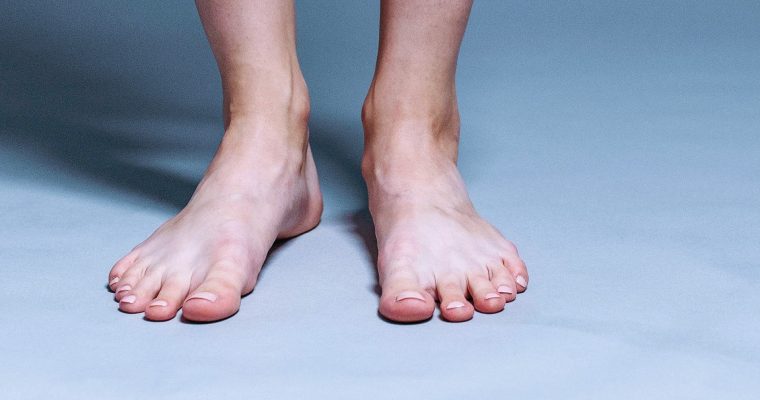
By Richard Bodell Over-Pronator or Pes Planus Generally, the foot rolls inward beyond 15% gradation. Such foot structure is associated with a low arch and low instep. As such, understanding weakness in the ankle requires firm heel counter, strong lasting board and shank. The goal …
UNDERSTANDING PERIPHERAL NEUROPATHY
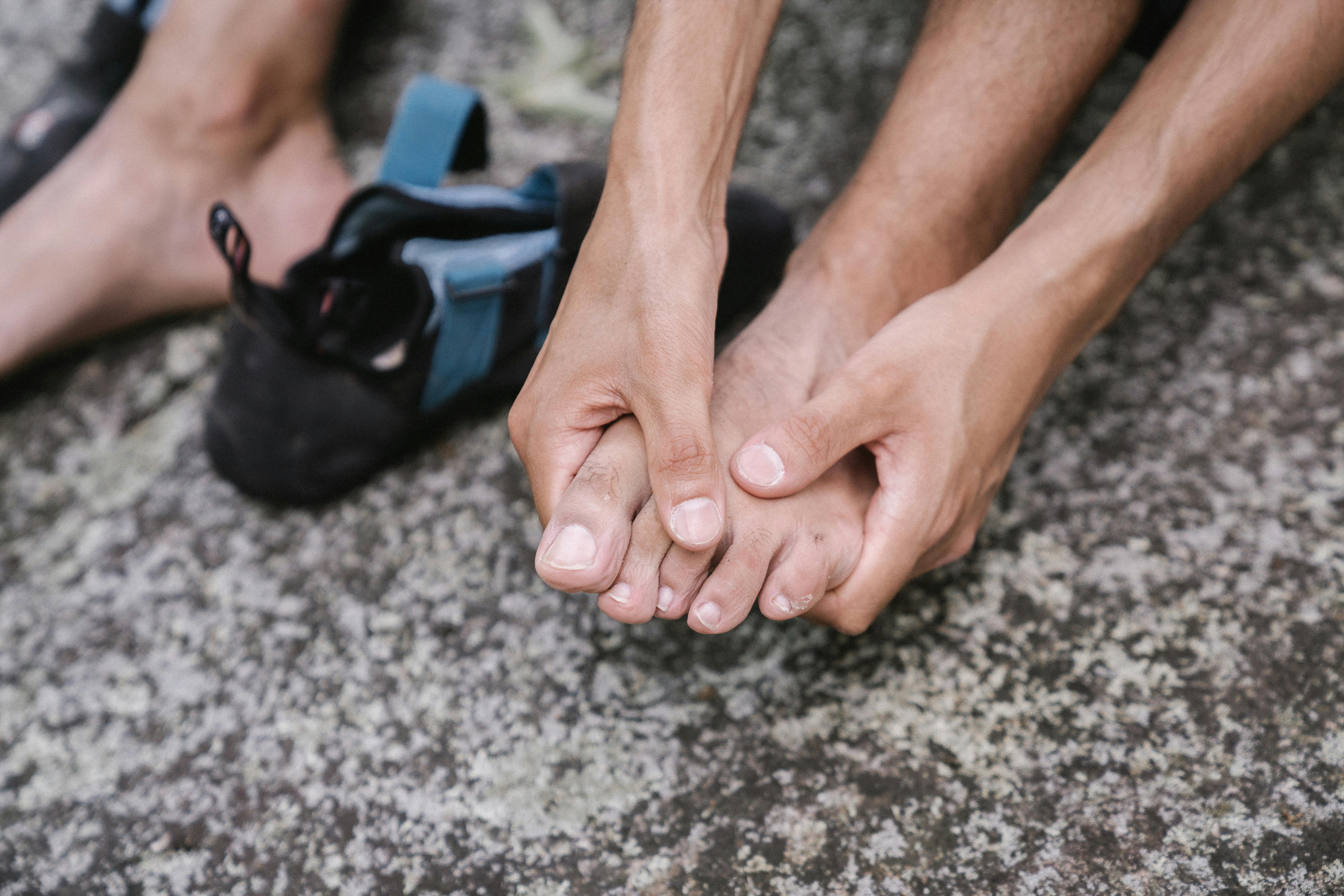
The name of the condition actually tells you what it is. Peripheral means beyond as in beyond the brain and spinal cord. Nero, is related to nerves and pathy as in disease. Such concepts fused together provide the meaning of peripheral neuropathy. That is, the conditional result occurs when nerves that connect to the brain and spinal cord from the rest of the body are damaged or diseased.
Indeed, the peripheral nerves are part of an overall network that connects the brain and spinal cord to the muscles, skin and internal organs. Damage to these nerves deteriorates or rather interrupts communication between the brain and extremities of our body. As such, can impair muscle movement, prevent normal sensation (feeling) in the arms, legs and further extremities of the body such as toes and fingers. This condition can perhaps cause pain, numbness and overall sensation of soreness.
Peripheral Neuropathy can occur due to traumatic injuries, infections, metabolic issues such as heart disease and exposure to toxins. In addition, two of the most common causes of neuropathy are diabetes and obesity. Indeed, conditions that can be reversed with proper diet and exercise. Remember, neuropathy is always anecdotal. It is always result of something else as in stroke and/or heart attack.
Those affected by peripheral neuropathy can experience pain such as stabbing, burning, tingling or numbness. Such conditions can be treated with medicines and/or weight loss.
Additional health conditions that are perhaps causal in terms of nerve damage and lead to peripheral neuropathy:
- Autoimmune diseases-such as lupus, rheumatoid arthritis, cancers and its treatments thereof.
- Diabetes-the most common cause.
- Infections-shingles, HIV, Lyme disease, viral and bacterial infections.
- Kidney or liver disease.
- Alcoholism and drug addictions.
- Medicines-such as chemotherapy.
- Back injuries.
- Low vitamin levels-B vitamins, copper and vitamin E are essential for nerve health.
Such is the complexity of the nervous system, to the rest of the body through motor nerves. Moreover the peripheral nerves send sensory information to the central nervous system through sensory nerves. Hence the delicacy of our body motor function. Perhaps this information will help clarify the interaction of our nervous system and our overall body health.
DIAGRAM OF PERIPHERAL NEUROPATHY
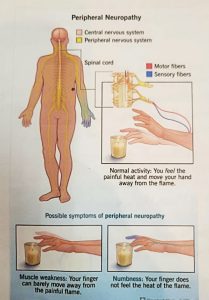
Notice the peripheral nervous system. Any damage to the delivery system to the outer extremities can be detrimental to motor function. Such as the persons’ walking gait and ability to feel any infections penetrating the foot.

DISCUSSION ON MORTON’S NEUROMA
Our feet are a complex system of 28 bones, 33 joints and 100 plus muscles in each foot. Such is the structure of each foot to keep us humans vertical. Without proper shoe structure and support, the problem of Morton’s Neuroma increase. Without proper weight …
PLANTAR FASCIITIS
The concise definition of PLANTAR FASCIITIS is consistent pain located on the plantar (bottom) of the heel. Additionally on the medial (inside) along the middle of the entire foot. Specifically, the plantar fascia is a series of fibrosis bands or rather tendon-like structure that extends …

A LOOK AT MEN’S COMBINATION LASTS
Combination Last Definition
A shoe mold/form/last for a designed shoe that has features width forefoot (ball of foot), yet a heel twice as narrow as forefoot. As such, for superior fit and comfort, such lasts remain the standard for generations. Width structure of lasts is strictly liner. Meaning a men’s standard Medium is further translated D/B or rather, D width with a B heel. Hence the combination last. Such is the following diagram:
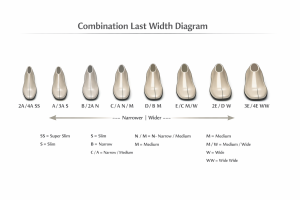
SCALE
2A/4A = Super Slim
A/3A  = Slim
B/2A  = Narrow
C/A   = Narrow/Medium
D/B   = Medium
E/C   = Medium/Wide
2E/D  = Wide
3E/E  = Wide Wide or
4E/2E = Wide Wide
5E/3E = 3 Wide or
6E/3E = 3 Wide
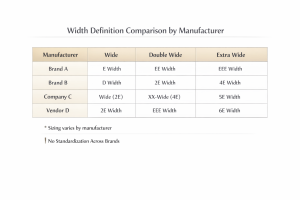
Please Note: Depending on the manufacturer, wide, double wide, are dependent on manufacturer/vendor definition.
One must have definitive knowledge of various vendor definitions of lasts. Such lasts are imperative for proper fit. Moreover, can only be found in high-quality footwear.
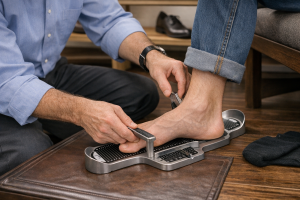
As such, when doing footwear shopping, always insist on having your feet measured by a professional. Sit and fit independent footwear stores should always measure feet for proper fit.
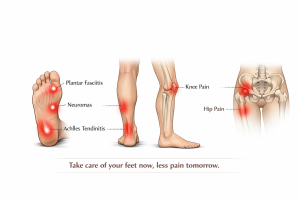
Perhaps one may scoff at such nonsense. However, without proper foot care, you will pay for such a mistake. Indeed, plantar fasciitis, neuromas, Achilles tendinitis, knee and hip pain will eventually catch up with you.
Take care of your feet now, less pain tomorrow.
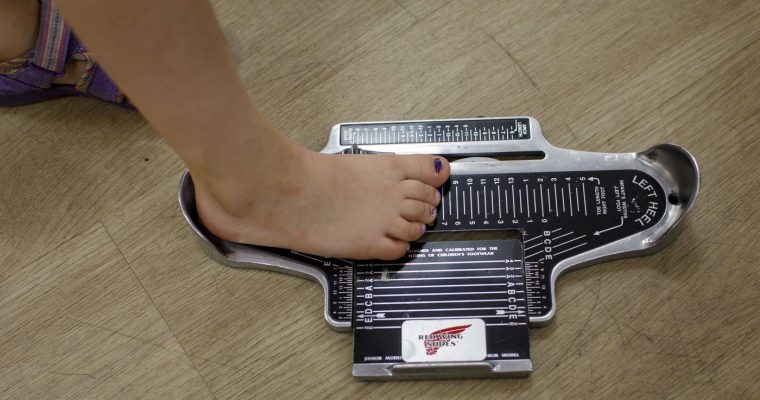
Understanding Women’s Shoe Widths: A Guide to Getting the Perfect Fit
For years, we’ve received countless questions about women’s shoe widths — and for good reason. Width sizing can be one of the most confusing parts of buying footwear. So today, we’re breaking it all down in a clear, simple way to help you understand what …
A New Approach: Strength and Hope for the Homeless, Addiction, and Mental Illness
A NEW APPROACH: STRENGTH AND HOPE FOR THE HOMELESS, ADDICTION AND MENTAL ILLNESS Author Richard Bodell Just as a child questions about the calling of our existence and purpose. Such inquiries are often checked by a weary disciple who has lost all hope of imperfect …
Remembering Lewis Grant Bodell
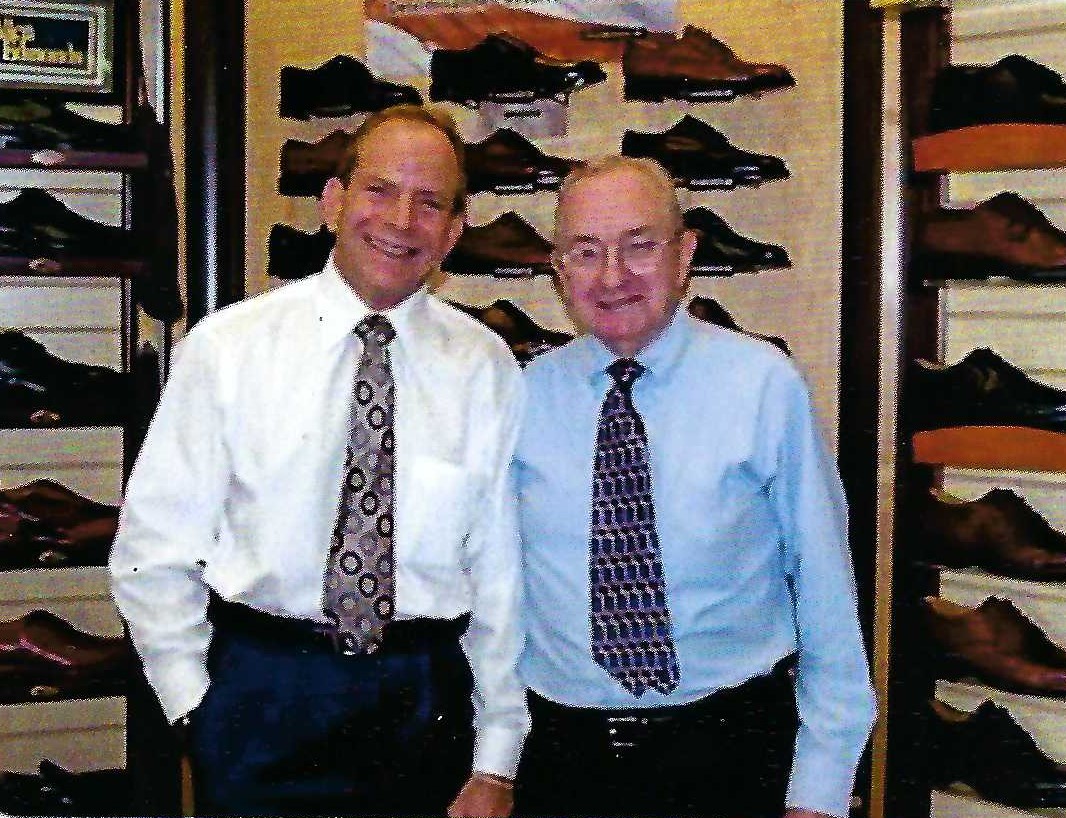
Beloved, husband, father, grandfather, great grandfather, brother, uncle and friend. Lewis Grant Bodell, 92, passed away September 1, 2020 at his daughters’ home in Templeton, California. He lived a full life of over 92 years, and as we hoped and prayed, passed away peacefully in his sleep of natural causes.
He was a man of great faith, generosity and kindness. Among his many great qualities was his selfless service to others and his unending dedication to his church and family. He loved unconditionally and always shared with others. He was an active member of the LDS church and served in many capacities in his lifetime. Because his family was so important to him, he believed “Family is Forever”. He enjoyed family gatherings and relished his role as Grandpa and Great Grandpa.
In addition to being a wonderful family man he was an outstanding businessman. He owned Bodells Shoes for over 54 years, and it is still in business today continuing the tradition by son Rick. As a result of his many years of business and contributions to the Long Beach community, he was recognized by the city and state. In 2018 the building and street location were dedicated to “Lew Bodell” in his honor.
He loved camping and fishing and was proud owner of his cabin in Veyo, Utah. He also wrote 2 books, one about growing up in the 30s and a biography of his older brother and hero (Richard) who was killed in action in the Korean War.
Born February 03, 1928 in Salt Lake City, Utah to Lewis Godfrey Bodell and Ella Miranda Bacon Bodell. Married his beloved Barbara Mae Burleson January 29, 1949.
Survived by his daughter Barbara Rowan (Michael), Templeton, CA; two sons, Richard (Kim), Yorba Linda CA and William (Tanny) Queen Creek AZ; 9 grandchildren and 13 Great grandchildren. Preceded in death by his wife Barbara, brothers Richard and Harry, sister Marilyn, daughter Peggy and Granddaughter MaryAnne.
Services will be 2:00 Tuesday Sept 22, at Rose Hills Mortuary 3900 S Workman Mill Rd, Whittier Ca 90601
Forever Loved … Forever Missed
For more information go to RoseHills.com
All Friends and Family are encouraged to leave messages and share memories:
Lewis Bodell Facebook or Bodell’s shoes Facebook
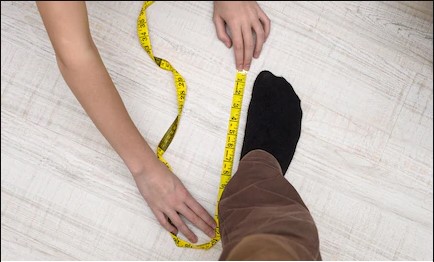
How to Measure Feet When Buying Shoes Online
When buying shoes online it can be difficult to determine which size you should purchase since you are not able to try them on. Most people know their size, or think they know, but sizing for different brands can run differently. First thing to do is …